.svg "logo")

The most common pricing question in the carbon market this year is what credits cost. For anyone developing a project, that is not the question. The credits are not issued yet. The real question is what they are worth now, years before delivery, to a buyer willing to commit early.
That price gets negotiated rather than observed and the discount a developer accepts on a forward sale is really two discounts stacked on top of each other, only one of which is worth accepting.
The discount you should accept
The first is delivery risk, and it is legitimate. A buyer committing today to credits arriving in 2029 is taking on the possibility that they arrive late, arrive short, or never arrive. That risk has a price, and it typically sits somewhere in the range of 15% - 30% below expected spot at delivery.
The useful thing about this portion is that it is not fixed. It reflects the plausible range of outcomes for a specific project, which means it narrows as that range narrows. Permitting already secured rather than pending, a methodology with an issuance track record behind it, a validation body already engaged, a team that has taken a project through to issuance before: each one gives a buyer less uncertainty to price around. A developer who can shrink that uncertainty is negotiating on something they control.
The discount you shouldn't
The second discount has nothing to do with the project. It comes from not knowing what comparable deals are being priced at.
This is where the asymmetry sits. A buyer negotiating a forward purchase has usually run similar processes before, or has advisers who have. A developer is often working from a single reference point: the last offer they received. Every other input into a carbon project has a discoverable market rate, from verification to land to labour. The credits themselves, at the stage when the pricing decision actually matters, do not.
So part of what looks like risk pricing is simply the cost of negotiating without reference points. Unlike delivery risk, this part earns nobody anything. It is just the gap between what one side of the table can see and what the other can.
Why open pricing matters on the supply side
Closing that gap does not require knowing what any individual deal closed at. It requires a visible range: what credits of a similar type, vintage, and delivery window are being offered at, publicly, right now.
That is what AlliedCredits is built to provide. Every listing, spot or forward, is public and indicative, which means a developer preparing for a conversation with a buyer can see roughly where the market sits before the first number gets put on the table. It does not price a project, and it does not replace a negotiation. It removes the part of the discount that comes from working in the dark.
For a project that needs forward sales to get built at all, that is not a marginal difference. It is the difference between accepting a price and pricing.
See where forward pricing sits
Live spot and forward listings, all public and indicative, are on AlliedCredits. Worth narrowing to the listings closest to your own project type and delivery window before your next pricing conversation.
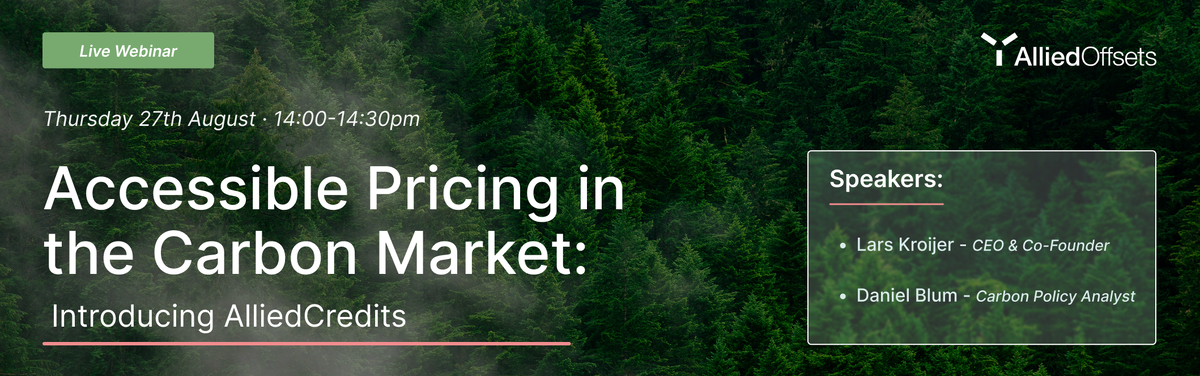
Coming up: on Thursday 27th August we're running a webinar on open pricing in the carbon market, covering current pricing trends, why forward pricing has been so difficult to see, and a live walkthrough of listing and browsing credits on the platform. Register here.