.svg "logo")

The CORSIA market is currently moving in two opposing directions. While ICAO continues to expand eligible Phase 1 supply, the European Commission is simultaneously proposing stricter eligibility criteria for EU-based airlines. This divergence is reshaping expectations around what supply is actually usable for compliance.
Diverging signals in CORSIA Phase 1 supply
ICAO approved two new programs for Phase 1 eligibility this week, the Forest Carbon Partnership Facility (FCPF) and the BioCarbon Fund Initiative for Sustainable Forest Landscapes (ISFL), adding to the pool of theoretical supply.
At the same time, the European Commission has proposed criteria that, if adopted, would significantly tighten eligibility for EU-based airlines, potentially excluding most currently available Phase 1 credits.
FCPF and ISFL add theoretical supply, but authorization remains the key constraint
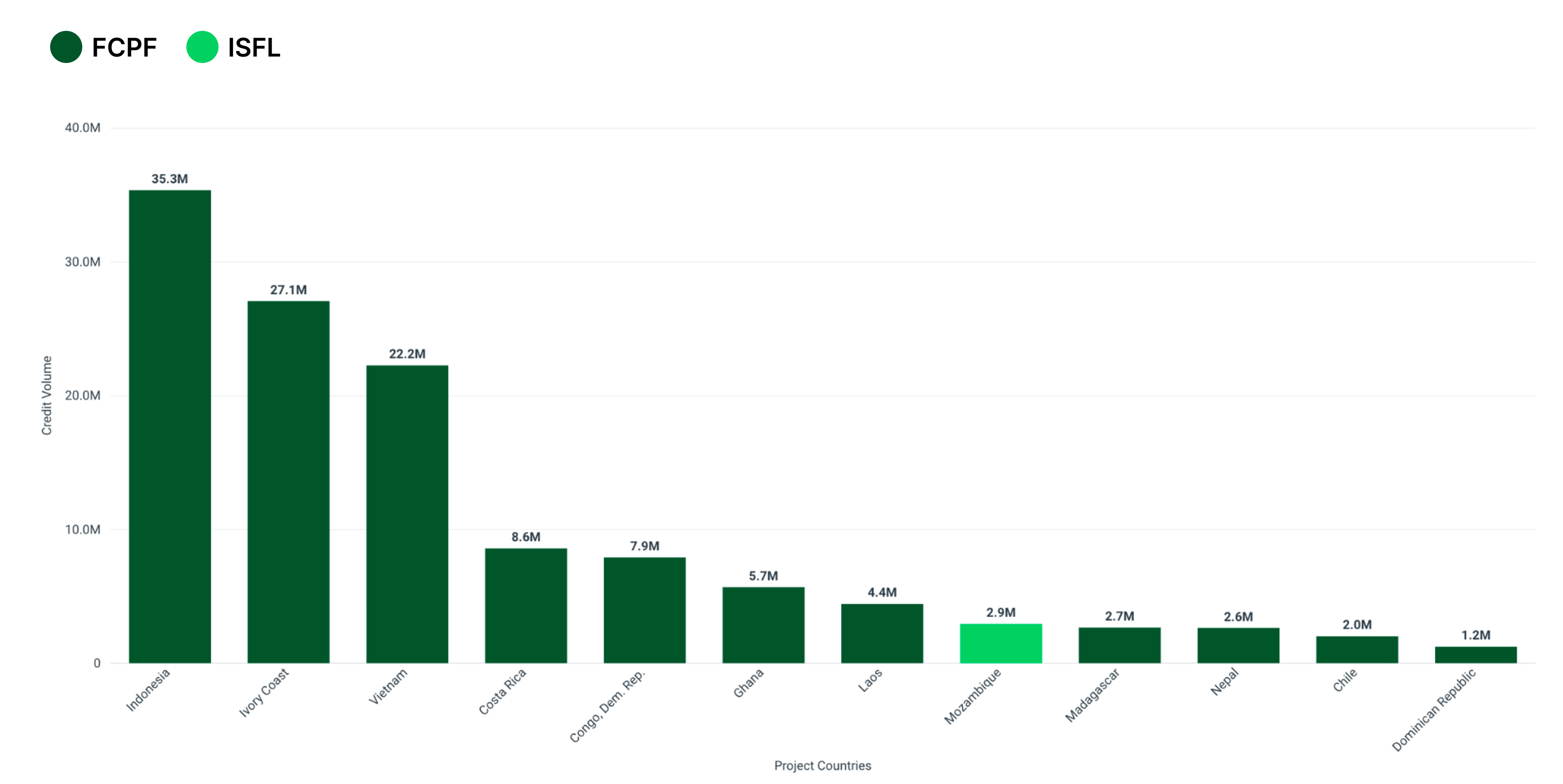
Potential remaining (unretired) supply from FCPF and ISFL programs sits at 123 million credits across 12 countries. However, with zero host country authorizations in place, the real-world supply impact remains uncertain.
Supply is highly concentrated. Indonesia leads with 35.3M credits (29%), followed by Ivory Coast (27.1M) and Vietnam (22.2M). Mozambique is the only ISFL program in the dataset, with 2.9M credits remaining.
Indonesia recently published Regulation No. 6/2026, clarifying that forestry project developers do not require host country authorization to sell credits to foreign buyers. This provides further regulatory clarity following the 2022 moratorium on international credit sales. AlliedOffsets also provided comments on this development to Carbon Pulse (Source: Carbon Pulse).
World Bank CATS Issuances by Project Country
Source: AlliedOffsets Premium Dashboard
EU proposes tighter Phase 1 eligibility criteria
In the opposite direction, the European Commission (DG CLIMA) has published a concept note proposing additional eligibility criteria for EU-based airlines under CORSIA Phase 1.
Although not yet formal policy, the proposal would exclude project types deemed high risk in terms of non-additionality, including:
- Forestry credits from High Forest, Low Deforestation (HFLD) countries
- Clean cooking and cookstove credits where non-renewable biomass assumptions exceed host country defaults
Under a proportional cancellation approach for cookstove methodologies, only around 10% of current supply would remain eligible.
If implemented, these criteria would remove a substantial portion of currently available Phase 1 supply for European airlines.
CORSIA Phase 2: approved programs and eligibility window
For Phase 2 (2027-2029), ICAO has approved four programs: ACR, ART TREES, Gold Standard, and Verra.
Eligible unit dates across all programs span from the 1st January 2021 to 31st December 2029, meaning earlier vintages remain valid for compliance. This significantly expands theoretical supply availability, though actual accessibility will still depend on issuance, authorization, and market uptake.
Why this matters
The EU’s proposal, if adopted, would introduce integrity standards beyond ICAO requirements, effectively creating a two-tier compliance environment for European airlines.
This comes at a critical time, with Phase 1 retirements approaching in January 2028 and host country authorization pipelines already under pressure. The result is a widening gap between theoretical eligibility under CORSIA and what is practically available for compliance.
New analysis from AlliedOffsets and Artio shows that insurability, alongside host-country authorization and market risk factors, is a key constraint shaping how much of CORSIA’s eligible supply is actually accessible. While eligible credit volumes have more than doubled over the past year, a significant share remains out of reach for airlines.
Download the full report here to explore the findings in more detail.