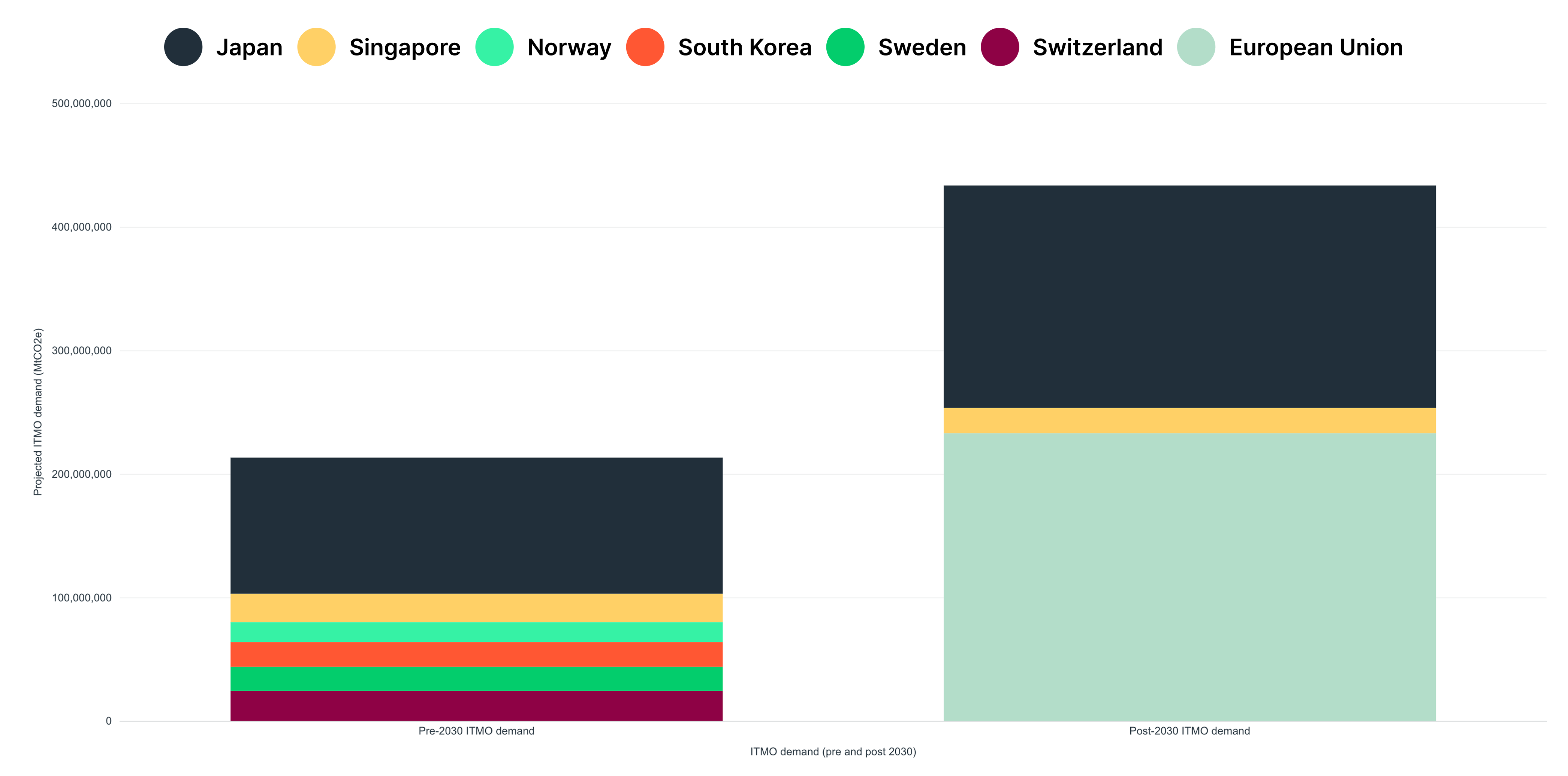
A small group of countries is already shaping early demand under Article 6.2 of the Paris Agreement, each with distinct sectoral preferences and implementation approaches. Japan, Switzerland, Singapore, and South Korea are actively supporting project development across multiple geographies, reflecting both strategic priorities and evolving interpretations of crediting methodologies. While activity remains limited in terms of issued and transferred ITMOs, demand is expected to scale significantly over the coming decade.
Article 6.2 Recap
Article 6.2 of the Paris Agreement enables countries to engage in bilateral or multilateral cooperation through the transfer of Internationally Transferred Mitigation Outcomes (ITMOs). In practice, this allows buyer countries to finance emissions reduction activities abroad and count those reductions toward their Nationally Determined Contributions (NDCs), subject to corresponding adjustments to avoid double counting. Unlike centralized mechanisms, Article 6.2 operates through decentralized agreements, giving participating countries significant flexibility in structuring transactions, selecting project types, and defining methodological approaches.
What buyer countries are doing
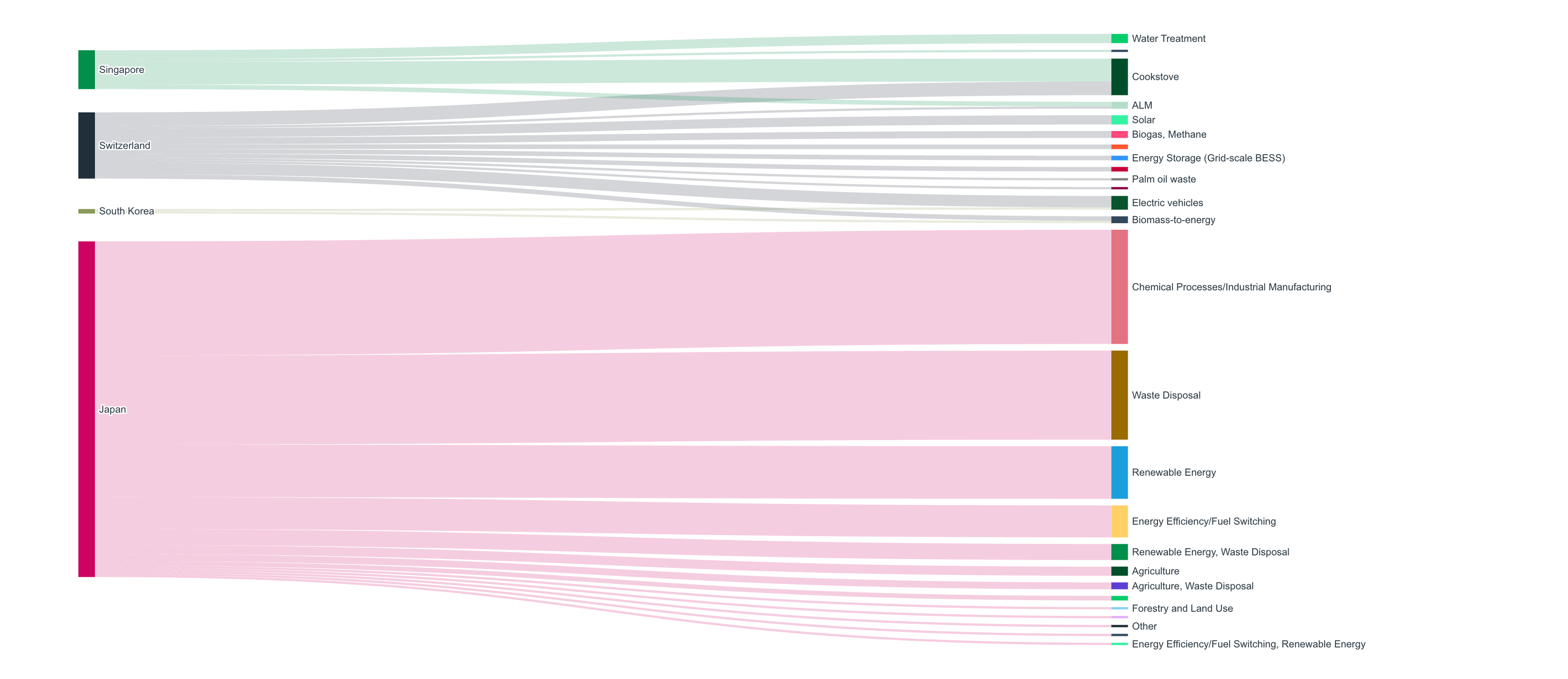
Four countries are already supporting the development of 190 projects across 22 host countries. Japan leads through the Joint Crediting Mechanism (JCM), with 147 projects, and a strong concentration in Chemical Processes and Industrial Manufacturing, Waste Disposal, as well as renewable energy and energy efficiency. For example, this includes projects such as the installation of 106 MW of solar capacity in Vietnam.
Switzerland follows with 29 projects developed fully under the Article 6.2 framework, supporting a more diversified portfolio including electric vehicles, solar, and clean cookstoves. One example is the Transformative Cookstove Activity in Rural Ghana, which aims to improve the livelihoods of 180,000 farmers while reducing more than 3.2 million tons of CO2 by 2030.
Singapore is currently supporting 17 projects, with a clear concentration in cookstoves, water treatment, and AFOLU activities, particularly in Ghana. South Korea, while at an earlier stage, is supporting two projects: a waste disposal project in Uzbekistan and an electric vehicle initiative in Cambodia.
Project sectors supported by buyer countries under Article 6.2 deals
Parties gain flexibility under Article 6.2
Notably, buyer governments retain significant flexibility to prioritize sectors aligned with their strategic and economic interests. This is reflected in the diversity of project portfolios observed to date. Methodological approaches are also relatively flexible: while credits must meet high-integrity standards and be approved by host countries, there is scope to apply locally developed methodologies.
For example, Chile has implemented a battery energy storage system (BESS) displacement methodology, developed by Sherpas Group SpA and supported by Switzerland, in the Diego de Almagro Sur BESS project. The project is expected to reduce emissions by up to 600,000 tons of CO2 by 2030, illustrating how Article 6.2 can accommodate country-specific methodological innovation.
Conclusion
Despite a growing number of bilateral agreements (BAs) and memoranda of understanding (MOUs), actual transfers remain limited. To date, only five transactions with corresponding adjustments have been completed, totaling approximately 65,000 ITMOs. Of these, 51,000 originate from the Bangkok e-bus programe between Thailand and Switzerland.
Looking ahead, demand for Article 6-aligned credits is expected to increase significantly over the next decade. The European Union is likely to emerge as a key demand driver, particularly post-2030. Under AlliedOffsets’ conservative estimates, international credit demand could exceed 230 million credits between 2036 and 2040 (Figure 2), highlighting the scale of the potential market as compliance demand begins to materialize.
Sovereign Article 6 Compliance Demand (Pre and post 2030)